Not a member yet? Sign Up!
Info
Please use real email address to activate your registration





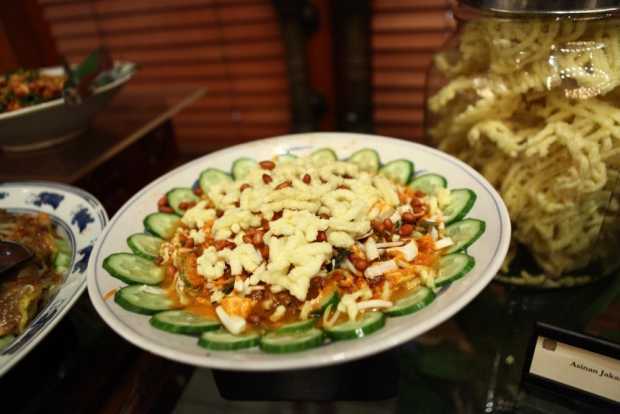
Swandani Kumarga, owner of Dapur Solo, an Indonesian restaurant chain did not realize that the business decision she made helps reduce carbon emission.


Dapur Solo serves traditional Indonesian food and is very popular among office workers in Jakarta for its delicious spread and affordable lunch boxes. Instead of sending foods from its head office to locations all over Jakarta, Swandani established five kitchens in different places to be close to her consumers.

Swandani was a participant at a Focus Group Discussion on Local Food & Carbon Foot Print at DNPI, the Indonesian National Council on Climate Change. The discussion, attended by government officials, businesses, non government organizations and the media, aimed at increasing awareness on local food choices as a way to reduce carbon emission.
Climate Change and Food Systems
Understanding the variety and how good the foods are is expected to increase consumption of local food that eventually reduces carbon emission the culprit of global warming and climate change.
A recent analysis, Climate Change and Food Systems, estimated food production was responsible for between 19 and 29 percent of humankind's total greenhouse emissions. Further calculations on every aspect of food production and distribution revealed that the agricultural practices components account for around 80 percent of these emissions, but the combined contribution of transport, refrigeration, consumer practices and waste management is growing, as economies develop.

In current global food economy, most foods travel an average of 2400 kilometer from farm to plate. David Suzuki, a respected environmentalist eloquently encouraged us to think about the impacts of our food choices.
Local food will have shorter distance to travel, hence lower emission. It also does not need as much chemicals and processing to preserve compared to imported food.
Some of the factors that have impacts on the climate include the position of the product the food chain, the energy used for production, and how much food is transported up to the dinner table. These things directly increase both the carbon footprint of individuals, organizations, activities, and products.
Carbon Calculator
The carbon footprint is the amount of greenhouse gas emissions released by individuals or groups in conducting their activities per period. Carbon footprint unit is ton-CO2-equivalent (tCO2e) or kg-CO2-equivalent (kgCO2e).

Debi Nathalia, a staff at DNPI, presented information about the Carbon Footprint and DNPI Carbon Calculator that can be used to calculate personal, household, and office emissions.

Arie Parikesit, founder of Kelanarasa Culinary Solutions, enriched the discussion with the experience of several countries, including Indonesia in promoting local food. He recommends the One Village One Product Program (OVOP) initiated in 1979 by Dr. Morihiko Hiramatsu PhD, then the Governor of Oita Prefecture in Japan.
OVOP selects competitive products made from local materials and using local wisdom, creativity and unique skills to deliver unique products with true value aiming at both domestic and global markets. OVOP products include packed dried fish, kabosu (citrus) juice, shiitake mushroom, and Japanese noodles.

In 2002, a year before Hiramatsu ended his terms, OVOP has 338 local specialties, 148 facilities, 133 cultural items, 111 revitalized regions, and 80 items related to the environment, reaching 810 products in total.
Culinary Guessing Game
Arie Parikesit provoked the audience with Indonesian culinary guessing game. Only some were able to guess the origin of asam udeung, sego buk, karmanaci and ampiang dadiah. They are seasoned prawn from Aceh, rice dish from Malang East Java, meat dish from East Nusa Tenggara, and fermented buffalo milk from West Sumatera respectively. Arie continued his guessing game by presenting slides with the endless variety of Indonesian cuisines from different provinces.


Understanding the resources used for food production will make consumers more aware of the connection between food and climate change so that the choices made will be more climate friendly.
There are many ways to promote local food through the media and activation. Some that Arie Parikesit proposed include city culinary map, guide book, culinary articles in the media, social media and chat apps, culinary tours, culinary festival, potluck parties, corporate and public events.
Surviving the Game
Providing local food continuously, however, is not without its challenges. Imported foods storming the market with new taste and attractive colorful packaging make it difficult for consumers to keep choosing local food.

Dapur Solo, initiated by Swandani and later supported by Heru Kumarga her husband, has been in local food business for almost 30 years. The business that started in their small garage can now serve traditional food for big events with 10,000 people without difficulties and with less carbon footprint. Swandani said: “Dapur Solo survives due to our passion for good local cuisines.”

-------------------------------------
Images: Arie Parikesit, DNPI, Hyakusen, Dapur Solo.




 Omar Niode Foundation Blog is licensed under a Creative Commons Attribution-NonCommercial-ShareAlike 3.0 Unported License.
 Close
Close