Not a member yet? Sign Up!
Info
Please use real email address to activate your registration




It was already winter when we visited CERES Environment Park near Melbourne for the Climate Change Educators’s Skillshare Program. The cold weather did not dampen our enthusiasms to go back several times and learned all we could about this down-to-earth eco-oasis.
CERES - Centre for Education and Research in Environmental Strategies, founded in 1982, is an award winning, not-for-profit, sustainability center located on 4.5 hectares rehabilitated mined land.


In a nutshell, CERES has green technology displays, eco-buildings, education and training programs, and social enterprises that demonstrate food security, sustainable agriculture, energy efficiencies, and water conservation in action.
The social enterprises interested us most and range from organic market, café, and community kitchen, to permaculture nursery and fair food organics delivery.

Here are some of CERES facilities and programs that we were able to observe:
Backyard food
CERES Permaculture & Bushfood Nursery provides a way of farming to maximize the available land around the house as has been illustrated in our earlier post Unlocking Nature's Potential at Bumi Langit Institute.
Applying permaculture also reduces carbon foot print and allows consumers to enjoy local plants for themselves and their families. CERES teaches communities how to choose quality seeds of plants that are often used at home so that individuals or families can grow and enjoy their gardens.


Subik Baso, an Indonesian who works at CERES informed us that learning about permaculture is not just a way to add insights in planting seeds and getting better harvests, but also to get to know the history and culture of the plants.
The center offers all kinds of permaculture workshops and short courses such as a two sessions Intro to Permaculture; the Complete Urban Farmer with 14 sessions including an introduction to permaculture, aquaponics, chookcare, mushrooms, bee keeping, propagating and seed saving; and the Permaculture Design Course that takes 17 short sessions and 8 long sessions to complete.
Meters traveled veggies
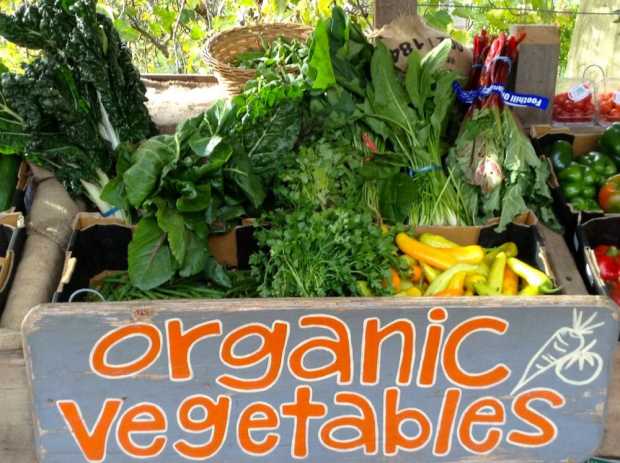
The heart of CERES’ food community is its garden. The market, opens several times a week, offers the best local organic produce harvested from CERES’ market gardens and other areas around Melbourne.


In contrast to other local markets, this one has a way of labeling foot print or the distance traveled by fruits and vegetables to reach the market. The purpose is to let consumers make an informed choice while instilling a sense of love for local food.
CERES proudly claims: “Our veggies have traveled meters not miles!”
Honey Lane
While shopping for organic goods, customers have an interesting view of Honey Lane Market Garden and see where some of the food they are buying was grown and harvested.


Not far from Honey Lane is the community garden. Currently there are about 50 plots of lands rented to those who do not have enough space for gardening at their homes. The plot renters also have a chance to exchange information on how to obtain seeds, maintain soil fertility with animal manure and compost, not using pesticides and find a good way to market their harvests.
Know the food of your ancestors
Culture and planting are two things that can not be separated. Knowing the culture or history of the place we live can help us find out what our ancestors ate during their days.
CERES believes that when talking to children about farming, it is important to first make the children understand the culture we live in. That way they will love their environment and have a sense of responsibility in caring for it.


Multicultural villages at CERES although not gigantic facilities are also excellent venues to learn about the cultures of the Aborigins, Indonesia, and Africa.
When we visited the villages one teacher was talking about the Yara River in Melbourne, what animals live there and imagining what would happen to the animals if the river is to be heavily polluted with plastics, and chemicals. Such learning method eventually sensitize children to protect their environment.
Community Kitchen
We were introduced to the community kitchen when preparing for an Indonesian Feast for climate educators from India and Australia. It is a registered commercial kitchen demonstrating state of the art green technology and sustainable design.


The Community Kitchen can accommodate up to twelve people to cook and many more to enjoy the cuisines. It is such a sophisticated kitchen that it took 10 of us less than two hours to prepare a table full of food for 40 people.
With classes at CERES such as cooking food from many countries, cheese making. edible weeds, tempeh making, seasonal foods and pantry challenge, cooking with bush food, preserving, and the art of fermentation, the community kitchen is a perfect place for parties, team building and social cooking day,
Sustainable Living
That CERES has been around for more than three decades is evidence that communities long to live sustainably, have a good relationship with the earth, do not consume more resources than available and to leave enough for the next generations.


The park has sustainable living components all in one place, and a successful learning venue as well since to date its school education programs has logged in one million visits.
-----------------------------
Images: Omar Niode Foundation




 Omar Niode Foundation Blog is licensed under a Creative Commons Attribution-NonCommercial-ShareAlike 3.0 Unported License.
 Close
Close