Not a member yet? Sign Up!
Info
Please use real email address to activate your registration




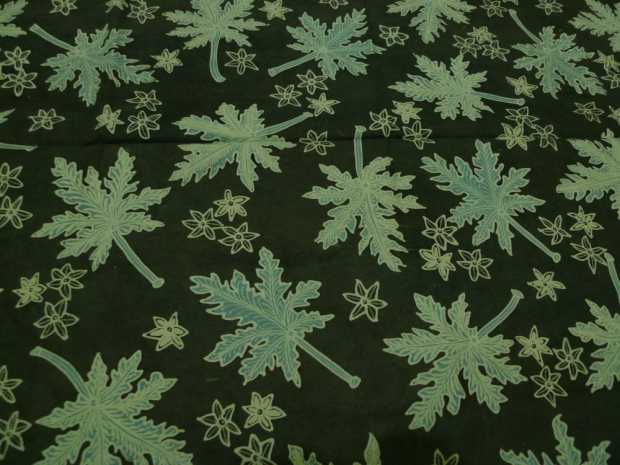
If you were in Indonesia on October 2nd, or in Indonesian embassies all over the world, you will relish a feast of color and design of Indonesian batik.
The 2nd of October is the National Batik Day, celebrated to raise public awareness in protecting and developing Indonesian batik. It was on the same date 3 years ago that the United Nations Educational, Scientific and Cultural Organization (UNESCO) inscribed Indonesian Batik on the Representative List of the Intangible Cultural Heritage of Humanity
Creating batik
Quoting from UNESCO’s description: "The techniques, symbolism and culture surrounding hand-dyed cotton and silk garments known as Indonesian Batik permeate the lives of Indonesians from beginning to end: infants are carried in batik slings decorated with symbols designed to bring the child luck, and the dead are shrouded in funerary batik.
 Batik is dyed by proud craftspeople who draw designs on fabric using dots and lines of hot wax, which resists vegetable and other dyes and therefore allows the artisan to color selectively by soaking the cloth in one color, removing the wax with boiling water and repeating if multiple colors are desired.
Often handed down within families for generations, the craft of batik is intertwined with the cultural identity of the Indonesian people and, through the symbolic meanings of its colors and designs, expresses their creativity and spirituality."
A short documentary: Indonesia Batik. A Living Art visually illustrates how batik is created. Produced by KADIN Indonesia Foundation and Indonesia Batik Museum Institute, the biopic is dedicated to all the craftspeople involved in the production of batik in Indonesia
The cloth maker, the artist, and the designer
Batik artist and designer, the late Iwan Tirta, elevated the visibility of batik and its feasibility in the international fashion arena. Educated at the London School of Economics and the Yale Law School, Tirta later decided to research and concentrate on batik creation, fashion and boutique. In an article Iwan Tirta, a man of many talents, Bruce Emond explained in the Jakarta Post that even when facing financial difficulties and illness Tirta was still creative by introducing traditional batik motifs on ceramics and silverware.
 Another sensation is batiks created by Obin Komara. Introducing herself as a cloth maker, Obin insisted that she is not a designer, nor a batik artist.
Nonetheless, Obin’s phenomenal works have reached many admirers all over the world. Obin, as Bruce Emond wrote in Obin the original, an article for The Jakarta Post developed innovative methods in producing traditional woven fabrics, and combined them with batik motifs.
Jamie Oliver, Al Gore and Mbok Bakul

At Omar Niode Foundation our recent pleasure involving batik and celebrity was when Chef Jamie Oliver, one of the world's best-loved television personalities and one of Britain's most famous exports, tweeted his love for batik.
At the Food Revolution Day Java in Jakarta Indonesia, last May, visitors to our event signed their names on a piece of cotton cloth, which was then tediously processed into a batik. Whereas, the cloth was still in its early stage of processing by the Honocoro Community when Jamie tweeted.

Early last year, Vice President Al Gore admired piece batik with names of all climate leaders attending the Climate Reality Project Asia Pacific Summit in Jakarta. The occasion was the second time Al Gore received a batik cloth as one was presented to him at the UN Conference on Climate Change in Copenhagen. Irma Haryadi a fine-art specialist processed the batiks presented to Al Gore.

Batik is not for celebrities only, prized from $1 to thousands of dollars apiece; it fits people from all walks of life, kings and commoners alike. Either Mbok Bakul, an old lady in traditional market selling beef satay in peaceful Yogyakarta or a child street performer in harsh Jakarta, all wear batik with a plethora of color to make ends meet.
------------------------------
Images: Dicky Edwin Hindarto, Irina Kasopa, TCRP, Batik Museum Institute




 Omar Niode Foundation Blog is licensed under a Creative Commons Attribution-NonCommercial-ShareAlike 3.0 Unported License.
 Close
Close