Not a member yet? Sign Up!
Info
Please use real email address to activate your registration





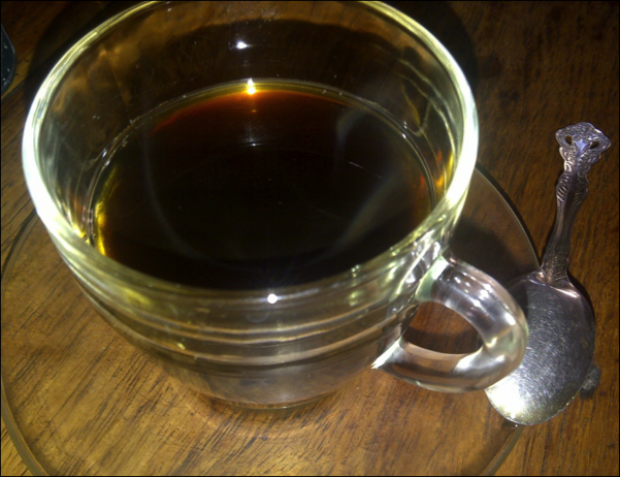
In coffee tasting, the beans’ story is as interesting as the cup of coffee itself as we experienced with Kopi Pinogu.
Gorontalo has a unique coffee culture. Modest coffee houses are abundant as places for sharing information, mostly politics. We first wrote about it and Kopi Pinogu in a blog post Sehati- Local Coffee and a House of Knowledge and presented Kopi Pinogu during the 2014 Ubud Writers and Readers Festival in the Street Food Session.
 Photo: George Grantham Bain Collection - Library of Congress
Queen Wilhelmina's Coffee
Kopi Pinogu, produced at Bone Bolango Regency in the Province of Gorontalo, is said to be the favorite coffee of Queen Wilhelmina of the Netherlands who reigned from 1890 to 1948.
The Pinogu sub-district is located in the middle of Bogani Nani Wartabone National Park where there is no access to asphalt road. It is remote and isolated but has a fertile soil and produces organic coffee, cacao, candlenuts, durian, corn and rice. To transport crops to other areas, workers have to walk through a hazardous trek passing terrains and forests that may take them 6 to 8 hours.
The regency of Bone Bolango aims at making Kopi Pinogu its flag product. There are requests from European countries, including Germany and the Netherlands, although like many artisanal products supply cannot be continuous.
 Photo: Wahyudin Kessa
Kopi Pinogu packages
Currently there are two Kopi Pinogu products in local shops. One is a 200-gram grinded coffee, presented in a glossy pack, labeled as Kopi Pinogu, Paling Top, Tiyombu lo Kopi Organik, meaning the best, the ancestor of Organic Coffee. The other, also grinded, is a 100-gram package wrapped in brown paper labeled Soewawacafe. Kopi Gorontalo. Pinogu.


As we are not coffee experts, to understand more about Kopi Pinogu we contacted a good friend, Yoshua Tanu, Indonesia Barista Champion 2014 and showed him the Kopi Pinogu packs. To learn coffee character, according to Yoshua, one has to start from the beans, similar to eating a good steak by starting with prime meat.
Pinogu coffee beans
Fortunately Mesalina Vivi Saputri MSi. a regional government official from Bone Bolango sent us 5 kilograms of Kopi Pinogu beans, a mix of Robusta and Liberica, for the coffee tasting,


We observed Yoshua Tanu, and a top coffee roaster Daryanto Witarsa (both co-owners of Common Grounds Café with Aston Utan) going through the process of roasting, grinding, brewing and tasting Kopi Pinogu.
In coffee tasting, the coffee communities use the terms coffee cupping, especially if the process follows an international standard such as the Cupping Protocols from the Specialty Coffee Association of America. Yoshua said the process of drying the beans after harvesting is important, also sorting the beans based on size and maturity as he did in the barista championship event.
Probat roasting

Using the famous Probat coffee roaster, Daryanto made two batches, medium dark and dark, both reached the second crack (Between 225 to 230 degrees Celsius). Ideally the coffee has to be grinded one day to one month after roasting and consumed at the latest 2 weeks after grinding.

Preciso grinding
Yoshua used a portable Baratza Preciso machine to grind our Kopi Pinogu. Preciso is a conical burr grinder producing a consistent, fine grind that works well for automatic drip, pour over, and French pots We put the grind in small glasses and simply poured hot water into them, smelled the coffee right away and slurped to taste.
Theoretically, to produce an excellent coffee, there are certain aspects from “bean to cup.” Coffee bean quality depends on the specific variety of bean, the microclimate in which it’s grown, how it’s grown, harvest, processing, drying, storage, and shipping.

The Specialty Coffee Association of America, determines important flavor attributes to evaluate for coffee as summarized by Café Imports:
• Fragrance/Aroma; tested in the dry and wet coffee grounds
• Taste, Aftertaste, Acidity; how lively and bright is the coffee
• Body; how weighty is the coffee on your palette
• Sweetness, Balance; does everything work well together
• Overall impression of the coffee; does it have everything that you expect/is there anything missing?
• Additionally, one needs to look for flavor defects in the coffee. Defects are negative flavors that take away from the quality of the coffee.
The story of Kopi Pinogu
If we were to be asked how good Kopi Pinogu is, the answer would depend on each taster because coffee taste depends on the beans, how the coffee is prepared and the sensory perception of individuals.
What is important in marketing Kopi Pinogu is to get its whole story including how remote the area is, how to get there, the individual coffee farmers, the coffee planting, and the history that spans decades of Kopi Pinogu connoisseurship.

After all, the world is now riding the third wave of coffee. Whereas the first wave considers coffee as merely a commodity, the second wave is about coffee shop chains, where consumers enjoy the ritual of coffee. The third wave of coffee cares for the best in all stages of production such as bean growing, harvesting, processing, roasting and brewing. Most importantly, the third wave of coffee emphasize on the relationships between coffee growers, coffee traders and roasters.
--------------------------
Images: Omar Niode Foundation, unless otherwise noted.



 Omar Niode Foundation Blog is licensed under a Creative Commons Attribution-NonCommercial-ShareAlike 3.0 Unported License.
 Close
Close